Move beyond treating symptoms
Recurring algae growth is often driven by excess nutrients, sediment accumulation and biological imbalance. Oase helps address these underlying factors to support long-term water quality improvement.
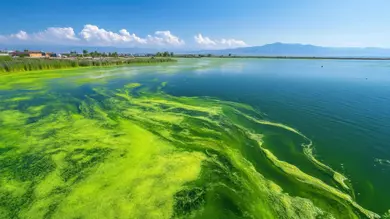
Treat the cause, not the bloom
Algae is the most visible symptom of an unbalanced system. It is rarely the actual problem.
Blooms affect clarity, appearance, usability, and ecosystem health across recreational, commercial, and operational waters. Reacting to each bloom is a cycle. Changing the conditions that produce them is a solution.
Oase helps bring algae under control while addressing the factors that let it return, for a more sustainable path to lasting water quality.


Why algae develops
A bloom is rarely caused by one thing. Excess nutrients, low oxygen, sediment buildup, and biological instability all contribute.
Rapid intervention is sometimes necessary. On its own, though, it treats the symptom, not the system.
That is why Oase works to restore balance rather than simply react. The goal is fewer blooms over time, not a faster response to each one.
Common signs of algae
Green water
Excess nutrients can trigger rapid algae growth, turning otherwise clear water green.
Surface algae
Dense algae accumulations on the surface can affect appearance, usability and oxygen exchange.
Cyanobacteria blooms
Harmful algal blooms can pose risks to ecosystem health, public use and water quality.
Reduced water clarity
Algae growth can significantly reduce visibility and impact the overall condition of a waterbody.
Odors
Algae blooms and associated biological activity can contribute to unpleasant smells.
Rising treatment requirements
Increasing reliance on reactive treatments can be a sign that the root causes of algae growth remain unaddressed.
Our approach
Oase combines nutrient management, restoration technologies, aeration, and targeted treatment to help control algae while improving the conditions that drive long-term water quality.
The aim is not only to remove a bloom, but to reduce the factors that allow blooms to return.

Water bodies most affected
Recreational Lakes and Ponds
Nutrient loading from runoff, organic matter and recreational activity can contribute to ongoing water quality challenges.
Stormwater and Retention Ponds
Designed to capture runoff, these systems often accumulate nutrients that can fuel algae growth and reduce water quality over time.
Golf Course Ponds
Fertiliser inputs, organic debris and warm conditions can increase nutrient pressure and create recurring water quality issues.
Municipal Water Bodies
Public lakes and ponds are often influenced by multiple nutrient sources, making long-term water quality management essential.
Aquaculture
Support healthier aquatic environments through improved oxygen conditions, water quality stability and nutrient management.
Agriculture
Improve water quality and reduce nutrient pressure to support more reliable agricultural water systems.
SeDox Max®
Advanced nutrient management for long-term algae control.
SeDox Max helps reduce the phosphorus that fuels algae growth, supporting clearer water and healthier aquatic environments.
By addressing nutrient pressure at the source, it helps create the conditions for more stable, resilient water systems.
Build healthier, more stable water
Speak with our team about practical algae management designed around your waterbody.