How to get your pond ready for Summer: complete care guide
Summer is when your outdoor pond is at its best: the weather is bright, fish are full of life and the garden is blooming.
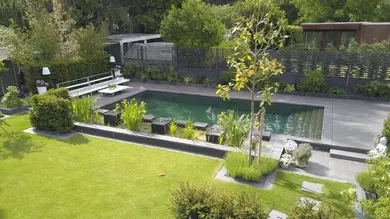
Just a little bit of preparation goes a long way, making sure your pond thrives all throughout the warmer months. In this guide, we’ll go through what Oase experts recommend getting your pond in tip-top shape for summer – whether it’s for swimming, Koi, other fish or simply making your outdoor space a wonderful place to be.
Why summer pond care matters
A lot happens in a pond in summertime. A few things you can look forward to – and a few challenges you can anticipate – include:
Rising temperatures: As the weather heats up, so does your water – which can have an effect on fish health and behavior, as well as the wider pond ecosystem.
Rising temperatures: As the weather heats up, so does your water – which can have an effect on fish health and behavior, as well as the wider pond ecosystem.
Algae: Stringy blanketweed, greening decor, murky water – you’re much more likely to notice all types of algae when it’s warm.
Water oxygenation: The higher temperature and increased algae can affect the oxygen levels in your water, which again can affect the health of your fish.
Varying nutrient levels: With all the activity in your pond, it’s more important than ever to keep on top of changing pH and nutrient levels.
Busy fish: Fish metabolism is at its highest in the summer, meaning you’ll see plenty of activity and they’ll need more food.
Breeding season: Summertime is breeding season for many fish, including Koi, as well as other local wildlife such as insects, birds, and amphibians.
Thriving nature: Plants bloom, pollinators flit about, and wildlife are on the move – both friendly critters and predators alike.
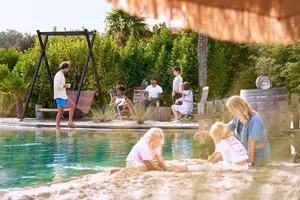
Start with a spring clean
Getting your pond ready for summer starts early in the spring. While things are a little quieter outside, you have enough time and space to prepare for the warmer months.
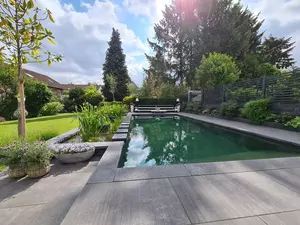
Give your pond a good spring clean. Remove any debris, vacuum up sludge, and scrub down the walls of the pond. This is particularly vital for a natural swimming pond, especially if you’re setting it back up after draining or covering it over winter.
If you put any equipment in storage – such as water features or UV clarifiers – now is the time to get them out. Give them a good clean and re-install them, ready to switch on as soon as you need them.
Once you start noticing more activity from fish, increase their food. And when summer truly seems to be on the horizon, perform a large water change, removing and replacing about 20% of the water.
Equipment, filtration and flow
Your pond’s equipment has more work to do in summer than at any other time of year – so take the time to check your filtration and circulation systems and make sure everything is running smoothly.
Test your flow rates, and turn up pumps and filters as summer approaches – increased flow helps support oxygenation and stop sediment from settling. It’s a good time to replace your filter media and UV bulbs too.
If you’ve been planning to upgrade your kit, now is also the ideal time. Swapping to a larger pump or more advanced filter can make a huge difference during peak season, especially in Koi ponds with higher bio-loads.
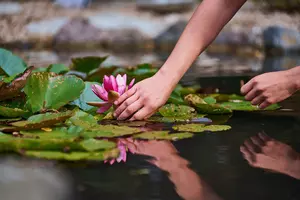
How to prevent and manage algae in Summer
The only thing that loves your pond as much as you is algae! Throughout the summer, even the healthiest bodies of water will almost certainly develop algae. A small amount is perfectly fine, but it can easily get out of hand.
You can prepare your pond to deal with algae by:
Removing stringy algae and blanketweed as soon as it appears
Testing the water pH and nutrient levels regularly and adding treatments if necessary
Keeping a suitable algae-tackling water treatment in stock, such as Oase’s AlGo
Installing, switching on, and increasing the capacity of a UV clarifier
Increasing your filter’s capacity and cleaning the filter media regularly
Adding barley straw to the water in spring
How to keep your pond cool in hot weather
Warm weather means warm water, and warm water means less oxygen, lower water levels, and potential threats to fish and plant health. A few things you can do ahead of time – before it’s too hot to be working hard on your pond – include:
Adding plants that provide shade – this could be tall marginal plants, such as reeds; types that grow on the surface, such as water lilies; or tall garden shrubs nearby, such as rhododendrons
Installing equipment that provides movement, such as a pump, aerator, waterfall, fountain, or other water feature
Investing in a good water thermometer to monitor the temperature
Stocking up on water conditioner for all the top-ups your pond water will need throughout the season
Healthy, happy fish: Summer fish care tips
Fishkeepers will know that summer means a very active pond indeed, with fish metabolisms at their highest in the warmer months.
As the year goes on, pay attention to how much your fish are moving – and eating. Increase their food gradually, focusing on high-protein foods to support their growing metabolism. And stock up on their favorite snacks; you may be feeding them up to four times per day in the summer!
Nutrient-dense treats can also support fish health and keep them happy. Wholemeal bread, oranges, lettuce, and shrimp are all popular with Koi.
However, keep an eye out too for uneaten food, and decrease their feed accordingly if they aren’t eating it. Extra food in the water can raise nutrient levels which encourages algae.
Late spring and early summer is also the perfect time of year for introducing new fish to your pond. Plan your trip to your local aquarium soon if you’re thinking of adding new stock this year.
Speaking of new fish, you can also prepare to support the breeding season for your Koi or goldfish. Make sure they have plenty of submerged plants to lay their eggs in and prepare another pond or tank for quarantining the fry when they hatch.
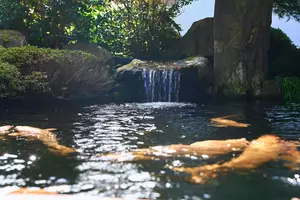
Gardening and landscaping
Spring is the time for a big gardening session ready for summer. Plant new foliage now, and it will be ready to grow and bloom throughout the summer.
Marginal plants in particular do very well in the summer – plus, they provide natural shade and support local friendly wildlife. Get new ones planted around your pond’s perimeter, and trim back older ones to allow for new growth.
Floating plants like water lilies, meanwhile, can also add shade, and they look stunning in the summer when they bloom. Spring is the time to start adding these types of plants too.
It’s also important to keep on top of pruning away or removing any dead, browning, and fallen plant matter. Left in the water, it can affect nutrient levels – which encourages the dreaded algae.
And finally, spring (and late winter) is also a good time for larger-scale landscaping projects, meaning your yard will be truly ready to enjoy in the summer. Why not add an attractive seating area near your pond?
The natural world
It’s not just your pond that thrives in summer; the whole of the outdoors comes to life.
You can encourage the local ecosystem by adding something as simple as native and pollinator-friendly plants. You can also help wildlife access the water easily with a ramp, sloped beach area, or surface foliage that can take their weight.
However, you may also need to be ready to deter predators that like to eat fish, such as herons, foxes, and neighborhood cats. Consider installing a decoy – like a scarecrow or a bird-shaped kite – or a net cover. As long as it’s close to the water surface, a net cover can still allow animals to drink, and other friendly wildlife (insects and small frogs, for example) can still get through the netting.
How to prepare your pond before vacation
Going away on a trip this summer? With a little preparation, your pond can stay in great shape even when you’re miles away.
If you have fish that need feeding, find a trusted friend who can help out – there’s still plenty of time to teach them the ins and outs of your pond. On the other hand, there’s also plenty of time to install an automatic feeder to do the job for you.
In fact, you can use the Oase Control app to monitor and adjust your filter, pump, water features, and other equipment from anywhere in the world. All you need is compatible equipment, and the app on your mobile phone.
Summer pond care troubleshooting
Some issues are known for being more prevalent in summertime. Get prepared with a little know-how, with this quick troubleshooting guide for common issues:
Stringy algae: Remove it from the surface using a stick or net. You can also help prevent it from worsening by increasing the filter capacity, adding movement via a pump or aerator, or using an anti-algae water treatment product.
Green or murky water: This is also the fault of algae. A UV clarifier can help get your water clear again, as can anti-algae treatments like AlGo.
Fish gasping at the surface: If you see fish gasping or gulping, that’s a sign of low oxygen levels in the water. Help them out by turning up your pump, installing an aerator, keeping water features and fountains running overnight, and performing regular water changes and top-ups.
Bad smells: Foul-smelling water can be caused by a few things – it could be algae, debris buildup, stagnation, organic waste, or sludge at the bottom of the pond. Try increasing aeration and movement in the water, manually removing debris and dirt with a net or pond vacuum, and avoiding over-feeding your fish.
Low water level: It’s normal for the water level to dip in hot weather, thanks to the effects of evaporation and wildlife visiting for a drink. The best solution is to simply top it up regularly – or you can add more shade, perhaps by covering part of the pond, to keep the overall temperature down and prevent evaporation.