All about aquarium filters: An essential for your tank
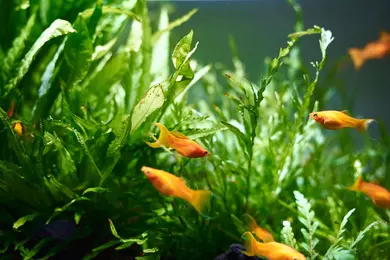
Beautiful water, healthy fish, a thriving underwater ecosystem – it all comes down to the filter you choose for your aquarium.
As the life support system for your tank and its inhabitants – from plants to animals and even beneficial bacteria – picking the right filter makes all the difference.
Find the perfect filter for your aquarium
Filter size and flow rate
When you’re seeking out the right filter, the main factor to consider is the size of your aquarium. Larger tanks will require a more powerful filter designed to keep a large amount of water in top condition.
The flow rate of aquarium filters is measured in liters per hour (l/h). Generally, it is recommended that your filter’s flow rate is at least four to six times that of your tank’s volume. For example, a 60-liter tank would need a filter with a 240-360 l/h flow rate.

Internal vs external aquarium filters
Before you start...
Aquarium filters fall into two main types: internal and external.
Internal aquarium filters sit inside the tank, partially or fully submerged in the water. They’re compact and because they touch the water directly, internal filters need less powerful pumping.
This size and system of filter is suitable for aquariums with most types of inhabitants, including very small fish. All our internal filters have adjustable flow control, which is really good for all fish.
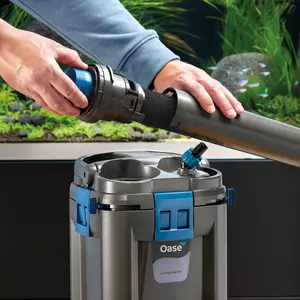
External aquarium filters, on the other hand, can be hidden out of sight, outside of the aquarium in a cabinet. They’re an excellent choice for display aquariums, or simply for keeping a perfectly clear view of your underwater world.
The main benefit of external filters, however, is the power they’re capable of. The additional size, movement, and filtration they offer makes them ideal for large-sized tanks, and of course for thoroughly clean water. However, since they don’t have to fit in a tank, the filter
How our aquarium filters work
A filter – a tank essential – works to keep water moving in the tank and removes harmful waste and other substances – thus keeping your underwater environment clean and healthy.
Our filters do this via three main types of filtration.
Mechanical filtration
For removing solid debris, such as dirt, fish waste, plant matter, and uneaten fish food.
Mechanical filtration is performed by pushing the water through sponges, the pores of which physically catch any particles and bits of dirt.
The most premium filters often include sponges with multiple pore sizes, better for catching varying sizes of debris.
Biological filtration
For removing biological waste, such as ammonia and nitrites – a vital part of cycling your aquarium.
The filter media used for biological filtration is usually porous with a large relative surface area (tiny ceramic balls, for instance), which allows beneficial bacteria to thrive. This bacteria consumes the waste and converts it into nitrate, helping maintain a healthy and naturalistic ecosystem in your tank.
Chemical filtration
For removing dissolved chemicals, such as nitrate and chlorine.
Chemical filtration works to remove and convert unwanted chemicals in your water – the kind that are too small for the human eye to detect, usually from broken-down waste and decaying organic matter. Again, it serves an important role in maintaining the aquarium’s nitrogen cycle.
Carbon filter media is often used for chemical filtration. Activated carbon sponges can play a dual role, offering both mechanical and chemical filtration at once.
How UVC clarifiers filter water
UV clarifiers don’t technically filter water – but they provide a much-appreciated service to your aquarium, for ultimate clear and healthy water. As a result, you’ll often find UV elements in your aquarium tech - such as ClearTronic.
The technology works by emitting ultraviolet light which harms and removes harmful organisms. As water in the aquarium flows past the light, the UV kills single-celled organisms such as algae and bacteria. The effect of the light also makes the cells clump together, so they can be more easily removed by a mechanical filter.
UV clarifiers aren’t essential for every aquarium – but if algae and murky water are a frequent issue, ultraviolet light can be the perfect addition to your filter system.
Explore Oase aquarium filters
EcoFlow
Our new, award-winning internal filter that enables adjustable flow rate and direction with integrated spray bar for optimum surface movement. This filter is particularly easy to clean as you only need to remove the filter.

BioCompact
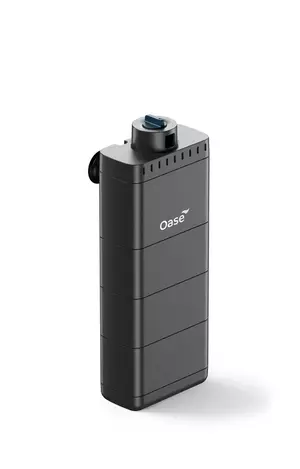
A compact internal filter, ideal for nano aquariums of 25 to 50 liters with few inhabitants. BioCompact has a carbon sponge filter and an adjustable flow rate of 120-240 l/h, and is designed for easy, flexible use – it can be installed vertically or horizontally, and is suitable for aquariums and paludariums alike.
BioPlus
An internal corner filter for medium-sized aquariums of 50 to 200 liters, capable of high-demand filtration. The BioPlus range is suitable for a huge range of aquarium types and setups, including the ability to switch between outlet nozzles, and a selection of sponge, carbon, and fleece filter media to suit your tank. Plus, it’s available with or without an adjustable water heater, built to perfectly coordinate.
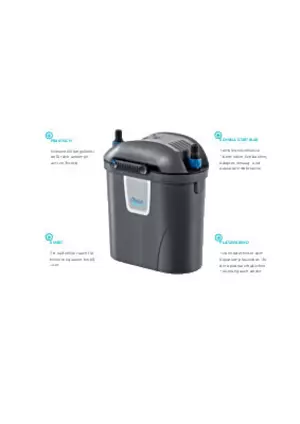
FiltoSmart
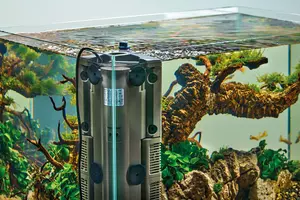
A compact internal filter, ideal for nano aquariums of 25 to 50 liters with few inhabitants. BioCompact has a carbon sponge filter and an adjustable flow rate of 120-240 l/h, and is designed for easy, flexible use – it can be installed vertically or horizontally, and is suitable for aquariums and paludariums alike.
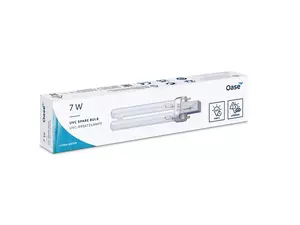
ClearTronic
Our UVC clarifier – designed as an easy addition to any aquarium filtration system. Bacteria, pathogens, and turbidity stand no chance against the powerful ultraviolet light, giving you clear, low-pathogen water with significantly less floating algae.
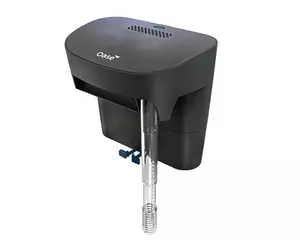
BioStyle
A filter with a smart design, a compromise between internal and external filter systems in 75-180 liter aquariums. The BioStyle hangs on the back or side of the tank, with no need for external hoses or a cabinet to hide it in - and without taking up space within the water either.
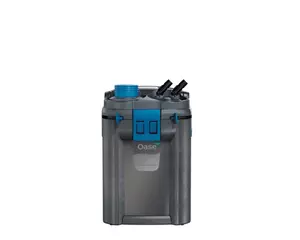
BioMaster2
The ultimate in external aquarium filters, offering powerful filtration for high-demand tanks - with a surprising level of energy efficiency. The BioMaster2 is available in various sizes for aquariums up to an astounding 850 liters and is suitable for tanks with large numbers of fish which makes this a very convenient product. Plus, it’s available with or without an adjustable water heater.
Find the perfect filter
Every aquarium deserves the perfect filter to keep the water in top condition – for a healthy biome and thriving fish. Explore Oase’s range of filters and find the best one for your tank.
FAQs
Should I keep my aquarium filter on all the time?
Yes, aquarium filters should be kept switched on and running 24 hours per day, for optimal filtration and maintenance of your water.
What size filter should I get for my aquarium?
Your aquarium filter should have a flow rate approximately four to six times the volume of the tank. For instance, a 100-liter tank needs a filter with a 400-600 l/h flow rate.
Can a filter be too strong for a fish tank?
Yes, a filter can be too strong for an aquarium. If the filter is too powerful for your tank’s size, it can cause your fish stress, prevent them from resting, or cause injury. Too much movement in a tank can also stop plants from rooting. That is why our filters are equipped with adjustable flow control.