Featured Article Test
Thanks to its reflective surface, water gives every garden exciting visual appeal. It's easier than you think to turn the dream of your own garden pond into a reality. Pre-formed ponds simplify the process of building a pond and are ideal for garden enthusiasts who have less experience.

Items needed
 Replacement foam set BioPress 4000 INT
SKU: 15558

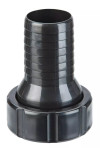 Add. pack AquaMax Eco 1 1/2" INT
SKU: 17064
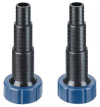 Add. pack AquaMax Eco 1" - 1 1/2" INT
SKU: 17272
 Add. pack AquaMax Eco 2" INT
SKU: 17069
Tools needed
To build the pond, you will need garden tools such as a shovel and spade, wheelbarrow, watering can or garden hose and string (e.g. cord), as well as a spirit level and a folding rule or tape measure. Sand is also required for installing the pre-formed pond. We recommend about ½ m3 of fine play sand or masonry sand (without gravel or stones).
The process
How to build a pond using a pre-formed pond
1. Prepare the installation area
Before we get down to the fine details, we first need to clarify how much time you should plan in for your project.
Building time: It should take you about a day to do the building work involved in installing a pre-formed pond. If you want your pond and the area surrounding it to be a little more opulent, you should factor in an additional day.
A small tip: You can do all the work on your own without any problems – but it’s more fun if you have someone else to help!
2. Connect the pump
The materials and tools you need are now ready and at hand. The next step is to determine the exact location for the pond. If you are creating a new pond, we recommend that you consider the following criteria when determining the location:
Sun exposure: Ideally, the location should be as semi-shaded as possible, allowing for around four to six hours of sunshine a day.
Vegetation: Choose a location sufficiently far away from larger trees so that foliage does not fall directly into the pond in autumn.
Viewing angle: Most importantly, the watercourse should be visible from your favourite spot in the garden.
3. Construction
Now you can start building the pond.

Marking the contours
First, align the pre-formed pond on the selected area in the way that you want to install it.
Trace the contour of the pre-formed pond with some sand, or string if you prefer.
If the preformed pond has different depth zones, you can also mark these out to dig the pit deeper and shallower accordingly.

Inserting the pre-formed pond
Next, use the markings to dig out the pit for the preformed pond. To ensure that the preformed pond will later stand straight and not be on a slope, dig out about 5 cm more at the deepest point (depth of the pre-formed pond). Fill this area with a layer of sand, which should be compacted first so that you are able to stand on it without sinking into it. Then level the sand with a spirit level

Check pit position
Once the pre-formed pond is seated in the pit, check its position and alignment using the spirit level and correct with sand if necessary. The edge of the pond should be slightly higher than the surrounding area. This prevents topsoil from being washed into the water when it rains.
Keeping the pond in position
To keep the pond in position, use additional sand and water. To fill in the pond, first fill it halfway with water. This will give it a stable hold. Then gradually fill the cavity between the pre-formed pond and the pit with sand in increments of 10 cm. After laying each increment, lightly water the sand so that it settles firmly into the gap. Finally, add more water to the pond until it is full.
Keeping the pond in position
To complete the installation, level the surrounding terrain. Once again, make sure to keep below the level of the pond edge.
Installing pond equipment (if stocking with fish)
If you would like to keep fish in the pond, you should now place the underwater filter in the centre of the pond and connect it up.
Planting greenery along the waterline
The reflective surface of the water will no doubt have already changed the atmosphere in your garden. Adding greenery the planting areas in the pond and on the waterline will now add that final touch. You can choose from the range of waterline, pond and marsh plants available from your plant market or supplier according to your taste and creativity. Recommended examples include different grasses in and on the pond, or large-leaf hostas for the surrounding vegetation.
4. Maintenance
Morbi pulvinar leo quis dui consequat vehicula. Duis eget laoreet ex, a tincidunt velit. Cras euismod, tellus eget hendrerit egestas, lectus turpis vehicula dui, sit amet hendrerit lacus orci non diam.
Waterline
Check the water level in the pond regularly and top up with water if necessary.
Vegetation
Examine the surrounding vegetation from time to time. Cut back any plants that protrude too far into the pond or watercourse and remove any unwanted greenery that has begun to grow there.
Autumn leaves
As the gardening season draws to an end, leaves gradually begin to fall from the surrounding trees. To prevent the water from silting up and becoming cloudy, remove fallen leaves and branches from the pond and watercourse.
Freezing temperatures
If your watercourse pump should not be kept in the pond in sub-zero temperatures, make sure to remove it from the pond before winter sets in. This is also the perfect opportunity to clean the pump (for example, with AquaActiv PumpClean, item no. 75806). Once you’ve removed (and cleaned) the pump, make sure it is safely stored in a bucket of water in a warmer area.
Useful tip
You can also choose any other pre-formed pond model for your project and follow the same installation steps. The important thing is that the shape and size fit the space available in your garden. Also, remember to select a pond filter and pump with a capacity to match the size of the pond.
Your most asked questions about pre-formed ponds, answered.
Key Takeaways
Taking the time to carefully choose your pond’s location pays off in the long run. The right spot supports healthy plants, creates a sanctuary for wildlife, and provides a relaxing, visually striking feature in your garden. Start by observing your space, considering sunlight, size, and safety, and you’ll be well on your way to designing the perfect water garden.